Published: 6th July 2026
Last Edited: 6th July 2026
Catergory: Practical Guides
In This Guide:
- The Practical Horse Owner Essentials
- Introduction
- Understanding Heat Stress
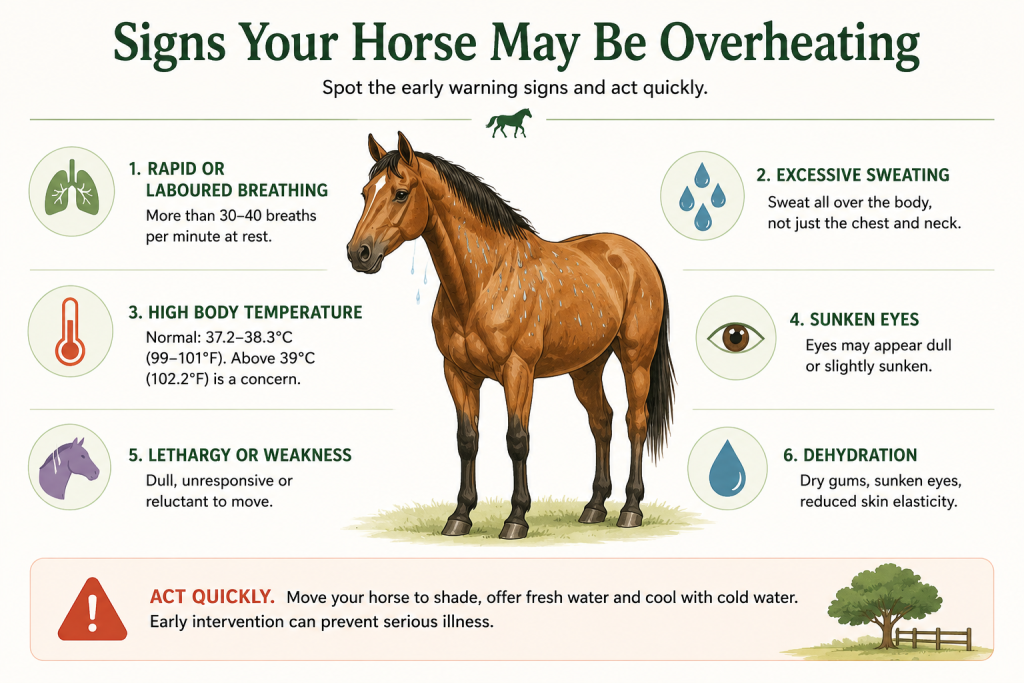
- Signs Your Horse May Be Overheating
- Water: Your Horses Most Important Defence Against the Heat
- Practical Ways to Help Your Horse Stay Cool
- Should You Ride During A Heatwave?
- Feeding During Hot Weather
- When To Contact Your Vet
- Myths VS Facts
- Frequently Asked Questions (FAQ’s)
- Key Takeaways
- The Practical Horse Owner Checklist
- Glossary
- References
- Disclaimer
The Practical Horse Owner Essentials
💧 Provide unlimited fresh water – Check buckets and troughs regularly and encourage your horse to drink throughout the day.
🌳 Make shade a priority – Whether it’s trees, a field shelter or a well-ventilated stable, every horse should have somewhere to escape the sun.
🌡️ Know the warning signs – Increased breathing, excessive sweating, lethargy and dehydration can all indicate your horse is struggling with the heat.
🐴 Adapt your routine – Ride during the coolest parts of the day if conditions allow, reduce strenuous exercise and don’t be afraid to postpone ridden work during extreme temperatures.
🚿 Cool horses promptly – Cold water is one of the quickest and most effective ways to lower body temperature if your horse becomes overheated.
☎️ Know when to call your vet – If your horse doesn’t improve quickly, stops sweating or becomes weak or distressed, seek veterinary advice immediately.
📋 Check your horse regularly – During hot weather, frequent observations can help you spot subtle changes before they become serious.
Introduction
The weather in the UK is best known for being cool and damp, and that is what our horses are adapted to. So a sudden spike in temperature can increase their risk of dehydration, overheating and heat stress.
But don’t worry! With sensible management, most horse will cope well with a heatwave. They will need a little extra help from us, and that’s where this guide can help!
Here we will discuss all the ways we can help our horses beat the heat. Access to water, shade and tweaking to exercise routines can all ensure your horse stays cool and happy. You will also learn the causes and signs of heat stress, so you know what to look out for. This is essential to ensure you can provide help to your horse promptly if it’s needed.
Understanding Heat Stress
Horses are naturally well adapted to cope with cold weather, but prolonged periods of hot, humid conditions can place significant strain on their bodies. During exercise, horses generate a large amount of heat through their muscles. To prevent their body temperature from rising too high, they rely primarily on sweating to cool themselves.
As sweat evaporates from the skin, it carries heat away from the body. However, when temperatures are very high or the air is humid, this cooling process becomes less effective. A horse may continue to produce large amounts of sweat but still struggle to lose enough heat, increasing the risk of heat stress.
Heat stress occurs when a horse’s body is unable to cool itself efficiently, causing its core temperature to rise. If left unmanaged, this can progress to heat exhaustion or even life-threatening heat stroke.
Some horses are more vulnerable than others. Extra care should be taken with:
- Older horses.
- Foals.
- Overweight horses.
- Horses with long or thick coats.
- Horses with underlying health conditions such as PPID (Cushing’s disease).
- Horses travelling or competing in hot weather.
Fortunately, most cases of heat stress can be prevented through sensible management. Providing constant access to fresh water, adequate shade, avoiding strenuous exercise during the hottest part of the day and recognising the early warning signs all play an important role in keeping horses safe during periods of extreme heat.
Signs Your Horse May Be Overheating
During periods of hot weather, it’s important to keep a close eye on your horse, even if they haven’t been ridden or exercised. High temperatures, strong sunshine and humid conditions can all make it difficult for horses to regulate their body temperature, particularly if they have limited access to shade or are more vulnerable due to age, weight or underlying health conditions.
Knowing the early warning signs of overheating allows you to act quickly before the situation becomes more serious.
Increased Breathing Rate
One of the earliest signs that a horse is becoming too hot is faster or heavier breathing. While horses naturally breathe more quickly after exercise, a horse standing quietly in the field or stable should not appear to be breathing rapidly or with obvious effort. Persistent or laboured breathing during hot weather should never be ignored.
Excessive Sweating
Sweating is a horse’s natural cooling mechanism, so some sweating during very hot weather is perfectly normal. However, heavy sweating while standing quietly, or sweating that continues for prolonged periods, may indicate your horse is struggling to keep cool.
Conversely, a horse that appears very hot but is no longer sweating can also be a cause for concern, as their ability to cool themselves may be compromised.
Lethargy or Reduced Alertness
An overheated horse may seem unusually quiet, reluctant to move, or less interested in their surroundings. Some horses may stand with their head lowered, appear dull, or spend more time than usual seeking shade.
Increased Heart Rate
As body temperature rises, the heart works harder to circulate blood and help dissipate heat. While you may not routinely check your horse’s pulse, a noticeably stronger or faster heartbeat than usual when your horse is at rest may indicate they are struggling with the heat.
Elevated Rectal Body Temperature
A healthy horse’s normal body temperature is generally between 37.2°C and 38.3°C. If you know how to safely take your horse’s rectal temperature, a reading above the normal range—particularly if accompanied by other signs of overheating—should be taken seriously.
Dehydration
Signs of dehydration can include:
- Dry or tacky gums.
- Sunken eyes.
- Reduced skin elasticity (the skin takes longer to return to normal when gently pinched).
- Reduced appetite.
- Drinking less
You should call your vet immediately if your horse shows severe signs of heat stress, collapses, appears confused, or does not begin to recover quickly.
While waiting for veterinary assistance:
- Move your horse into shade.
- Begin cooling with plenty of cold water.
- Offer fresh drinking water if they are willing to drink.
- Continue monitoring their breathing, heart rate and temperature.
Water: Your Horse’s Most Important Defence Against the Heat
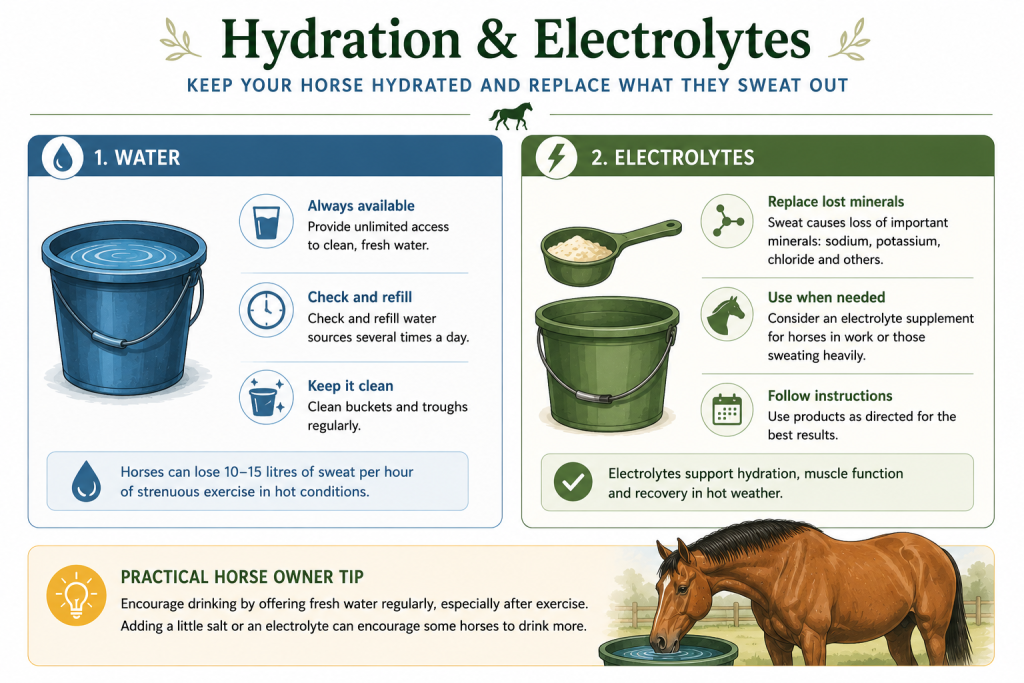
Fresh, clean drinking water is one of the most important things you can provide during hot weather. Horses lose significant amounts of fluid through sweating, even when standing quietly in the field, and replacing those fluids is essential for maintaining normal body temperature and preventing dehydration.
A horse’s daily water intake varies depending on its size, diet, workload and the weather, but during periods of hot weather many horses will drink considerably more than usual. This means water supplies should be checked regularly throughout the day to ensure buckets and troughs remain clean, full and easily accessible.
If horses are kept together, make sure there are enough drinking points for every horse. More dominant horses may prevent others from accessing water, particularly if only one trough is available.
Encouraging Your Horse to Drink
Some horses naturally drink less than others, so it’s worth keeping an eye on their water intake during a heatwave.
You can encourage drinking by:
- Providing plenty of fresh, clean water.
- Checking and refilling buckets or troughs regularly.
- Positioning water in shaded areas where possible to help keep it cooler.
- Soaking hay or feeding dampened feeds where appropriate to increase water intake.
- Taking familiar water from home if travelling to competitions or clinics, as some horses are reluctant to drink unfamiliar water.
Don’t Forget Electrolytes
When horses sweat, they lose not only water but also important electrolytes such as sodium, potassium and chloride. Horses in regular work or those sweating heavily may benefit from electrolyte supplementation, but this should always be accompanied by unrestricted access to fresh drinking water.
For horses that are simply enjoying turnout during a few hot days, providing constant access to clean water and a balanced diet is often sufficient. If you’re unsure whether your horse would benefit from additional electrolytes, speak to your veterinary surgeon or an equine nutritionist.
Practical Horse Owner Tip
💧 Never assume your horse has enough water just because the trough isn’t empty.
During hot weather, check water supplies several times a day. Troughs can empty surprisingly quickly, buckets can become contaminated, and automatic drinkers may occasionally develop faults that aren’t immediately obvious.
Practical Ways to Help Your Horse Stay Cool
Keeping your horse comfortable during hot weather is about more than simply providing water. Small changes to your daily routine can make a significant difference, helping your horse stay cool, comfortable and safe throughout the hottest days of summer.
Provide Plenty of Shade
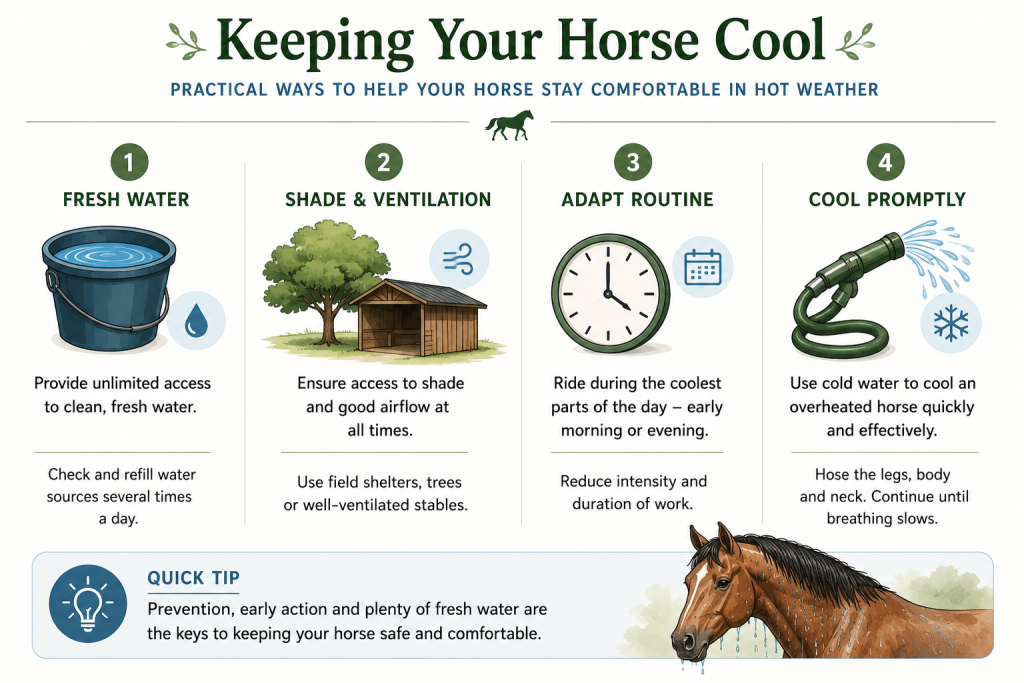
Whether your horse lives out or spends part of the day in a stable, access to shade is essential during periods of prolonged sunshine. Trees, field shelters and well-ventilated stables all provide protection from direct sunlight and can significantly reduce the risk of overheating.
If your horse is stabled during the hottest part of the day, ensure there is plenty of ventilation. Open doors and windows where safe to do so, allowing fresh air to circulate and helping to prevent the stable from becoming excessively hot.
Brick or stone stables are much better at staying cool, as they naturally absorb and maintain ground temperature and therefore act as natural insulators against the sun. However, wooden or metal stables have the opposite effect. They tend to trap heat and act like ‘heat boxes’. They can sometimes be kept cooler by effective ventilation, but it should be considered if your horse may actually be safer left out in the field if you only have access to wooden or metal stables, particularly if they do have access to natural shade outside.
Adjust Your Routine
During a heatwave, it often makes sense to adapt your daily routine around the weather.
Consider:
- Turning horses out overnight if suitable and safe.
- Bringing horses into a cool, well-ventilated stable during the hottest part of the day.
- Completing jobs such as grooming or mucking out early in the morning or later in the evening.
- Minimising unnecessary handling during peak temperatures.
- Only exercising early morning or late evening, if even at all. If work is neccessary, keep it light and slower.
Even small changes can reduce the amount of time your horse spends standing in direct sunshine.
Cool Horses with Cold Water
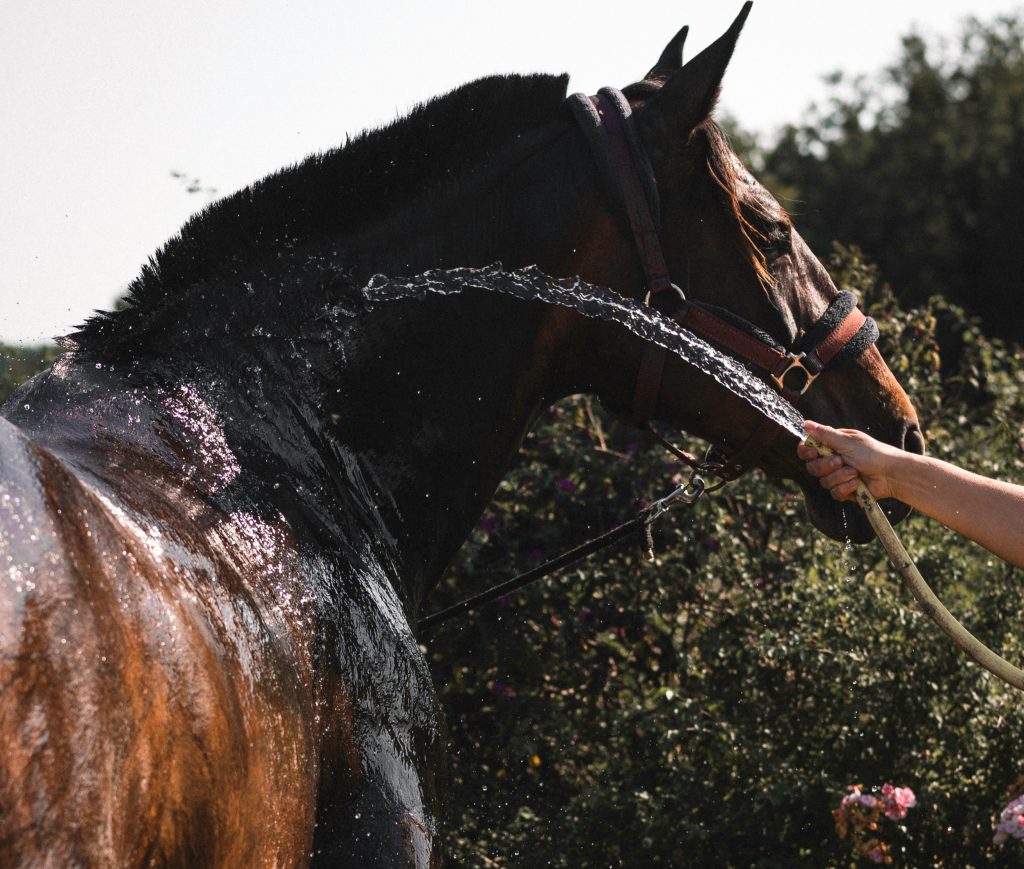
If your horse is becoming hot, hosing them with cold water is one of the quickest and most effective ways to help lower their body temperature.
Modern veterinary guidance supports using plenty of cold water over the large muscle groups, particularly the neck, shoulders and hindquarters. Continue applying cold water until your horse’s breathing and behaviour begin to return to normal.
If plenty of water is available, there is no need to stop after a single application. Repeated cooling is often more effective than allowing water to warm on the horse’s body.
It is also recommended to avoid scraping the water off your horses coat after application. Allowing the water to evaporate off the body naturally has the same cooling effect as sweating, and that is the process we want to encourage to aid cooling.
Be Mindful of Flies
Warm weather often brings an increase in flies, which can make horses restless and reluctant to stand quietly in shaded areas.
Using fly masks, fly rugs where appropriate, or applying suitable fly repellent can help keep your horse more comfortable. Horses affected by sweet itch or other insect sensitivities may need additional protection during hot weather.
Check Your Horse More Frequently
During periods of extreme heat, it’s worth checking your horse more often than usual.
Take a few moments to observe:
- Are they bright and alert?
- Are they drinking normally?
- Are they standing comfortably or showing signs of distress?
- Are they seeking shade?
- Has anything changed since your last visit?
Spotting subtle changes early often allows you to intervene before a horse becomes seriously affected by the heat.
Practical Horse Owner Tip
🌡️ Every horse copes with hot weather differently.
An older pony, an overweight cob and a fit competition horse may all respond very differently to the same temperature. Rather than relying on the thermometer alone, learn what is normal for your own horse and pay attention to any changes in their behaviour or routine.
Should You Ride During a Heatwave?
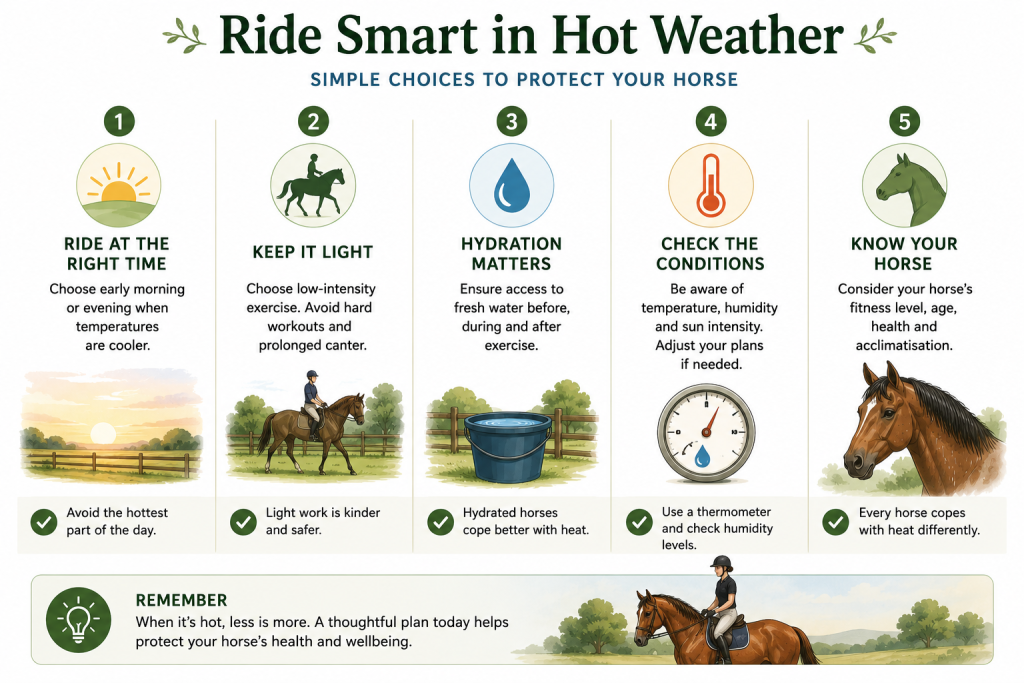
There is no single temperature at which riding automatically becomes unsafe. Factors such as humidity, your horse’s fitness, age, workload and access to cooling all play an important role. However, during periods of extreme heat it is sensible to adapt your plans and always put your horse’s welfare first.
If you do decide to ride, aim for the coolest parts of the day, such as early morning or later in the evening when temperatures have begun to fall. Even then, consider reducing the intensity and duration of your exercise, allowing your horse plenty of opportunities to recover.
Some activities generate significantly more heat than others. A gentle hack at walk through shaded lanes places very different demands on a horse than an intense schooling session, fast canter work or jumping. During a heatwave, it is often better to choose lighter exercise or enjoy some time on the ground instead.
Remember that the weather can change quickly. If temperatures continue to rise or your horse shows any signs of struggling, don’t be afraid to cut your ride short or postpone it altogether. Missing one ride is far less important than risking your horse’s health.
Alternatives to Riding
Not every day has to involve ridden exercise. During particularly hot weather, consider activities that allow you to spend time with your horse while avoiding unnecessary physical exertion.
Ideas include:
- Grooming in a shaded area.
- Practising groundwork or in-hand exercises.
- Stretching exercises.
- Enjoying some quiet bonding time.
- Giving your horse a cool rinse and a thorough health check.
Sometimes the kindest decision is simply to let your horse relax and wait for cooler conditions.
Practical Horse Owner Tip
🐴 Don’t feel guilty about changing your plans.
Many horse owners feel pressure to stick to their normal routine, but adapting your riding schedule during a heatwave is a responsible decision. Your horse won’t lose fitness from a few easier days, and they’ll benefit far more from staying cool, comfortable and healthy.
Feeding During Hot Weather
Hot weather can affect a horse’s appetite, but maintaining a consistent, balanced diet remains important. Wherever possible, avoid making sudden changes to your horse’s feed, as this can increase the risk of digestive upset.
Providing soaked hay or dampening feeds can be a simple way to increase water intake, particularly for horses that are reluctant to drink enough during very warm weather. Fresh forage also contains a higher water content than dry hay, which can help contribute to overall hydration.
Horses that sweat heavily lose not only water but also important electrolytes, including sodium, potassium and chloride. Horses in regular work or those producing large amounts of sweat may benefit from an electrolyte supplement, but these should always be given alongside unrestricted access to fresh drinking water.
If your horse has an underlying health condition, is a poor eater or you’re unsure whether dietary changes are appropriate, seek advice from your veterinary surgeon or an equine nutritionist.
When to Contact Your Vet
Most horses cope well with hot weather when sensible management practices are followed. However, it’s important to recognise when veterinary attention is needed.
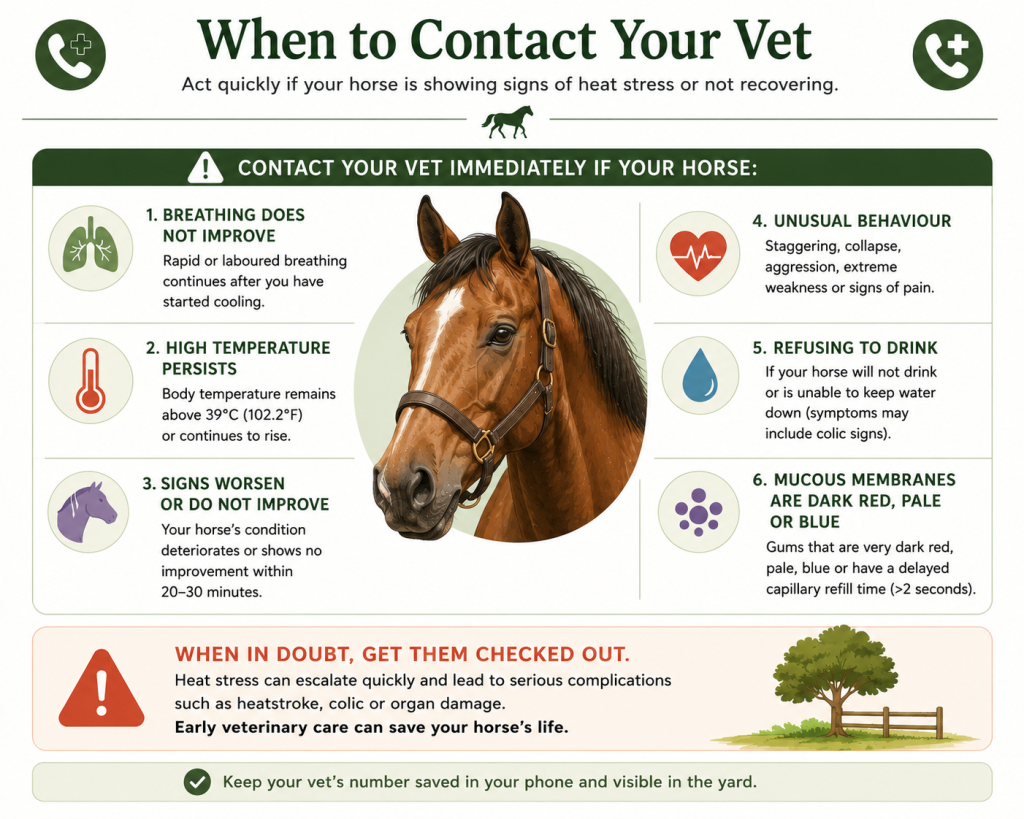
Contact your veterinary surgeon immediately if your horse:
- Develops rapid or laboured breathing that doesn’t improve.
- Has a persistently high body temperature despite cooling.
- Appears weak, disorientated or unsteady.
- Collapses or struggles to stand.
- Stops sweating despite remaining hot.
- Refuses to drink or shows signs of severe dehydration.
- Shows any sudden or significant change in behaviour that concerns you.
While waiting for veterinary advice, move your horse into a shaded, well-ventilated area, begin cooling with cold water, offer fresh drinking water if they are willing to drink, and continue monitoring their condition.
Early intervention can make a significant difference, so never hesitate to seek professional advice if you’re concerned.
Myths VS Facts
| Myth | Fact |
|---|---|
| A healthy horse will always let you know if they’re getting too hot. | Many horses show only subtle signs of overheating at first, such as standing quietly, appearing dull or breathing slightly faster than normal. Learning what is normal for your horse makes it much easier to recognise these early changes and take action before the situation becomes more serious. |
| It’s fine to leave a horse alone all day if they have water. | During a heatwave, horses should be checked regularly. Water troughs can empty or become contaminated, automatic drinkers can fail, and a horse’s condition can change quickly in extreme temperatures. Frequent checks help identify problems before they become emergencies. |
| Horses will always drink enough when they’re thirsty. | Some horses naturally drink less than others, particularly when away from home or when water tastes unfamiliar. Monitoring water intake during hot weather is important, especially for horses travelling or competing. |
| Leaving all rugs off is always the best option. | While many horses are perfectly comfortable without rugs in hot weather, some benefit from lightweight fly rugs that protect them from biting insects while still allowing heat to escape. The right choice depends on your horse, the weather and the type of rug being used. |
| Horses should always be brought into the stable during a heatwave. | Not necessarily. A cool, well-ventilated stable may be more comfortable than standing in direct sunshine, but some stables can become extremely hot with poor airflow. The best option depends on your individual facilities. |
| If your horse is sweating, they’re coping with the heat. | Sweating is a normal cooling mechanism, but excessive sweating can lead to significant fluid and electrolyte losses. A horse that continues to sweat heavily may still be struggling to maintain a safe body temperature and should be monitored closely. |
| Horses don’t need shade if they have plenty of water. | Fresh water is essential, but it doesn’t replace the need for shade. Prolonged exposure to direct sunlight can make it much harder for horses to regulate their body temperature, particularly during periods of intense heat or high humidity. Access to natural shade, field shelters or a well-ventilated stable can significantly improve your horse’s comfort. |
| If a horse isn’t sweating, they’re coping well with the heat. | A horse that is very hot but has stopped sweating can be in serious difficulty and should be cooled immediately while veterinary advice is sought. |
| You shouldn’t use cold water to cool a hot horse. | Current veterinary guidance supports using plenty of cold water to cool an overheated horse quickly. Repeated application of cold water is one of the most effective ways to lower body temperature. |
| Horses only overheat when they’re being ridden. | Horses can struggle to regulate their body temperature simply by standing in a field during prolonged periods of hot, humid weather, particularly if they have limited access to shade or fresh water. |
Frequently Asked Questions (FAQ’s)
Can horses stay out in the field during a heatwave?
Yes, provided they have constant access to fresh drinking water and adequate shade. Many horses are perfectly comfortable living out during hot weather, but they should be monitored regularly for signs of overheating or dehydration. If your field offers little or no natural shade, consider bringing your horse into a cool, well-ventilated stable during the hottest part of the day.
Should I ride my horse during a heatwave?
It depends on the temperature, humidity and your horse’s individual circumstances. If you choose to ride, aim for the coolest parts of the day and reduce the intensity and duration of exercise. During periods of extreme heat, it may be kinder to postpone ridden work altogether or choose lighter activities such as groundwork or grooming.
How much water does a horse need in hot weather?
There is no fixed amount, as water requirements vary depending on the horse, their diet, activity level and the weather. During hot conditions, horses often drink considerably more than usual, so water supplies should be checked and replenished regularly throughout the day. Always ensure clean, fresh water is freely available.
Is it safe to hose a hot horse with cold water?
Yes. Current veterinary guidance supports using cold water to cool an overheated horse as quickly as possible. Apply plenty of cold water over the body, particularly the large muscle groups, and continue cooling until your horse’s breathing and behaviour begin to return to normal.
How can I tell if my horse is dehydrated?
Common signs of dehydration include dry or tacky gums, reduced skin elasticity, sunken eyes, lethargy and a reluctance to drink. If you suspect your horse is dehydrated, encourage them to drink, provide shade and monitor them closely. Contact your veterinary surgeon if they show signs of severe dehydration or fail to improve.
Should I use electrolytes during hot weather?
Horses that sweat heavily or continue to work during hot weather may benefit from electrolyte supplementation to replace salts lost through sweat. However, electrolytes should always be provided alongside unrestricted access to fresh drinking water. If you’re unsure whether your horse needs additional electrolytes, speak to your veterinary surgeon or an equine nutritionist.
Do horses get sunburn?
Yes. Horses with pink skin, white markings or light-coloured muzzles are particularly susceptible to sunburn during prolonged periods of sunshine. Using a horse-safe sunblock, providing shade and avoiding prolonged exposure during the hottest part of the day can all help reduce the risk.
Can horses get heatstroke?
Yes, although it is relatively uncommon. Heatstroke is a medical emergency that occurs when a horse’s body temperature rises to dangerous levels and they are no longer able to cool themselves effectively. Prompt cooling with cold water and immediate veterinary attention are essential.
Should I leave my horse’s stable door open in hot weather?
If it is safe to do so, opening stable doors and windows can improve ventilation and help keep the stable cooler. Good airflow is particularly important during hot weather, but always ensure your horse remains secure and has access to fresh water.
Key Takeaways
During a heatwave, a few simple management changes can make a significant difference to your horse’s comfort and wellbeing. By planning ahead and remaining observant, most horses can cope well with periods of hot weather.
Remember to:
✓ Provide unlimited access to clean, fresh water.
✓ Ensure your horse has access to shade and good ventilation.
✓ Learn to recognise the early signs of overheating.
✓ Adapt your daily routine and avoid unnecessary exertion during the hottest part of the day.
✓ Cool horses promptly with cold water if they become overheated.
✓ Contact your veterinary surgeon if your horse shows signs of severe heat stress or fails to improve.
Hot weather doesn’t have to be a cause for concern, but it does require thoughtful management. By understanding how horses cope with the heat and responding to their individual needs, you can help keep them healthy, comfortable and safe throughout the summer.
🌿 The Practical Horse Owner Checklist🌿
Before you leave the yard today, ask yourself:
☐ Does my horse have plenty of clean, fresh water?
☐ Do they have access to shade?
☐ Have I checked them for signs of overheating?
☐ Have I adjusted my plans to suit the weather?
☐ Do I know when to call the vet if needed?
Glossary
Dehydration
A condition that occurs when a horse loses more fluid than it takes in. Dehydration can affect normal body functions and, if left untreated, may become life-threatening.
Electrolytes
Essential minerals, including sodium, potassium and chloride, that are lost through sweat. They help regulate hydration, muscle function and nerve activity.
Heat Stress
A condition that occurs when a horse struggles to regulate its body temperature during hot weather, causing its core temperature to rise. If not managed promptly, heat stress can progress to heat exhaustion or heatstroke.
Heatstroke
A serious medical emergency where a horse’s body temperature rises to dangerous levels and its normal cooling mechanisms begin to fail. Immediate veterinary attention is required.
Humidity
The amount of moisture in the air. High humidity makes it more difficult for sweat to evaporate, reducing a horse’s ability to cool itself effectively.
Ventilation
The movement of fresh air through a stable or shelter. Good ventilation helps remove heat and improves your horse’s comfort during hot weather.
Electrolyte Supplement
A feed supplement designed to replace the minerals lost through sweating. These are most commonly used for horses in regular work or those sweating heavily.
Thermoregulation
The natural process by which a horse maintains a stable body temperature. Sweating, seeking shade and increasing blood flow to the skin are all part of normal thermoregulation.
Rectal Temperature
The most accurate way of measuring a horse’s body temperature using a veterinary thermometer. It is commonly used to assess whether a horse has a fever or may be overheating.
🎁 Free Printable
Did you find this guide helpful?
Download your FREE Heatwave Horse Care Sheet to print, laminate and keep at your yard so you can always refer back to the information!
Simply enter your email below and we’ll send it straight to your inbox 👇

References
- The British Horse Society. Charity aimed at educating horse owners
- World Horse Welfare. Charity aimed at improving horse welfare
- Fédération Équestre Internationale (FEI). International federation for competing
- RSPCA. Animal welfare charity
- KBIS British Equestrian Insurance. Guidelines for helping horses in hot weather
- NAF Equine. Blog with guidance and products for healthy horses
- Country & Stable UK. Blog with helpful guidance and tips
Disclaimer
The information provided in this article is intended for educational purposes only and should not be considered a substitute for professional veterinary advice, diagnosis or treatment.
Every horse is an individual, and management decisions should always take into account your horse’s age, health, workload and individual needs. If your horse is unwell, showing signs of heat stress or overheating, or you have any concerns about their health or welfare, contact your veterinary surgeon without delay.
While every effort has been made to ensure the information in this guide is accurate and up to date at the time of publication, recommendations and best practice may change as new research becomes available.
Evidence & Editorial Standards – This article has been written using current evidence-based guidance and educational resources from recognised organisations within the equine industry. Every effort is made to ensure information is accurate and up to date at the time of publication. Articles are reviewed periodically and updated as recommendations evolve.