Published: 12th July 2026
Last Edited: 12th July 2026
In This Guide
- At a Glance
- Introduction
- Why Grooming Matters
- Building Your Grooming Kit
- Preparing to Groom Safely
- Step-by-Step Grooming Routine
- Cleaning the Hooves
- Mane and Tail Care
- Seasonal Grooming Tips
- Common Grooming Mistakes
- Myths VS Facts
- Frequently Asked Questions
- Glossary
- References
At a Glance
✔ Grooming keeps your horse’s skin and coat healthy.
✔ Regular grooming helps you spot injuries, swelling and other health concerns early.
✔ Always use the correct grooming tools in the correct order.
✔ Pick out your horse’s feet every day.
✔ Grooming strengthens the bond between horse and owner.
✔ Adjust your grooming routine according to the season and your horse’s coat.
Introduction
Grooming is much more than keeping your horse looking clean and tidy. It is an essential part of daily horse care that helps maintain healthy skin, encourages good circulation, removes dirt and loose hair, and provides an opportunity to check your horse for injuries or changes in condition.
A consistent grooming routine also helps build trust between you and your horse. As you become familiar with what is normal for your horse, you are more likely to notice small changes before they become larger problems.
Whether you own your first pony or have cared for horses for many years, understanding the purpose of each grooming tool and following a logical routine will help you groom efficiently while keeping your horse comfortable and relaxed.
Why Grooming Matters
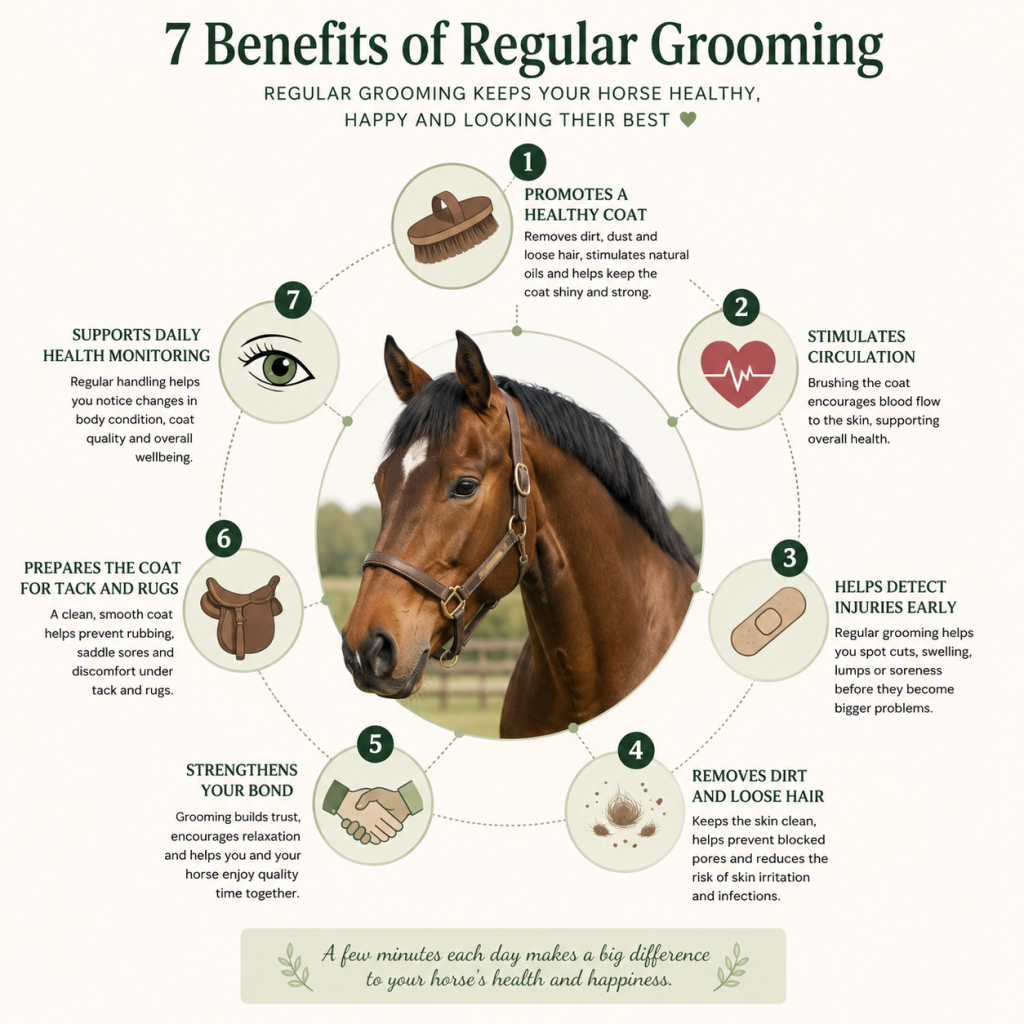
Grooming is one of the simplest yet most important parts of caring for your horse. While it certainly helps keep your horse looking clean and well presented, its benefits go far beyond appearance. A regular grooming routine supports your horse’s health, comfort and wellbeing, while also giving you the opportunity to notice changes before they develop into more serious problems.
Every time you groom your horse, you’re carrying out a visual and hands-on health check. As you run your hands over your horse’s body, you may notice cuts, swelling, heat, lumps, skin irritation or signs of discomfort that could otherwise go unnoticed. Detecting these changes early can make a significant difference to your horse’s health and recovery.
Grooming also helps to remove dirt, dried sweat, loose hair and dead skin cells from the coat. Using the correct brushes stimulates the skin and encourages the production of natural oils, helping to maintain a healthy, shiny coat while improving circulation to the skin.
Beyond the physical benefits, grooming provides valuable time to strengthen the relationship between you and your horse. Many horses find a calm, consistent grooming routine relaxing, helping to build trust and confidence through regular handling.
Finally, grooming allows you to check areas that are often hidden beneath rugs or tack. Looking closely at your horse every day means you’re more likely to notice changes in body condition, weight, coat quality or small injuries before they become larger concerns.
Although every horse has different grooming needs depending on their lifestyle, breed and the time of year, establishing a regular routine is one of the easiest ways to support their overall health and wellbeing.
💡 Practical Horse Owner Tip
Try to groom your horse in the same order each time. Following a consistent routine makes it much easier to notice when something has changed, whether it’s a new swelling, a small cut or an area that’s unusually sensitive.
Building Your Grooming Kit
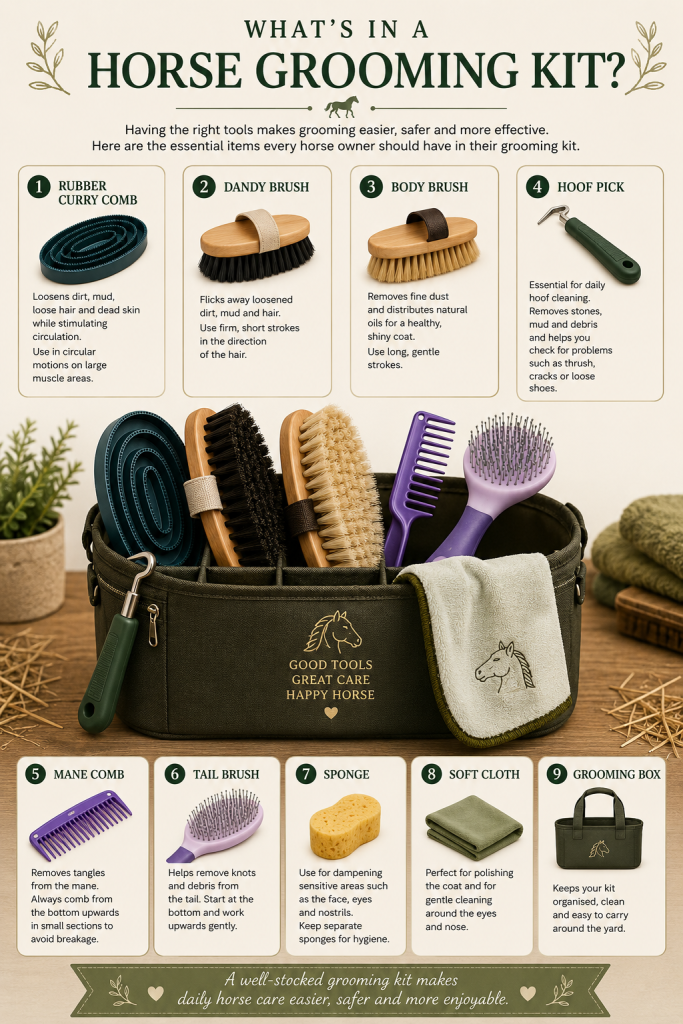
Before you begin grooming your horse, it’s important to have the right equipment. Each grooming tool has a specific purpose, and using them in the correct order will help keep your horse’s coat clean while making grooming quicker, safer and more comfortable for both of you.
You don’t need to buy the most expensive brushes to provide excellent care. A small collection of good-quality grooming tools that are kept clean and well maintained will be more effective than a large kit full of brushes you rarely use.
Many owners keep their equipment together in a grooming box or tote bag so that everything is easy to find and transport around the yard.
Essential Grooming Tools
Curry Comb (Rubber or Plastic)
The curry comb is usually the first tool used during grooming. It loosens dried mud, dirt, loose hair and dead skin while gently massaging the skin underneath.
Use circular motions over the horse’s large, muscular areas such as the neck, shoulders, back and hindquarters.
Avoid using a curry comb on:
- The face
- Legs below the knee and hock
- Bony areas such as the hips and spine
- Sensitive horses that dislike firm pressure
Dandy Brush
Once the dirt has been loosened with the curry comb, the dandy brush is used to flick away mud, dust and loose hair.
Brush using short, firm strokes in the direction of the hair growth.
Dandy brushes are particularly useful on:
- Legs
- Body
- Muddy areas
Avoid using a stiff dandy brush on your horse’s face or other particularly sensitive areas.
Body Brush
The body brush has much softer bristles and is used after the dandy brush to remove the finer dust that remains on the coat.
It also helps distribute the horse’s natural oils, giving the coat a healthy shine.
Use long, gentle strokes following the direction of the hair.
Hoof Pick
A hoof pick is one of the most important items in any grooming kit.
Picking out your horse’s feet daily removes stones, mud and debris that can become trapped in the hoof and allows you to check for problems such as:
- Thrush
- Cracks
- Loose shoes
- Foreign objects
- Bruising
We’ll look at hoof care in more detail later in this guide.
Mane Comb or Mane Brush
A wide-toothed comb or a soft mane brush can be used to remove tangles from the mane.
Always work from the bottom upwards, gently removing small sections of hair at a time to avoid unnecessary breakage.
Tail Brush
Many owners prefer to finger-pick large knots before using a brush.
Working from the bottom of the tail upwards helps reduce pulling and keeps the tail fuller and healthier.
Sponge
Keeping separate sponges for different areas of the horse is recommended.
For example:
- One sponge for the eyes and nostrils.
- A separate sponge for the dock and underneath the tail.
This helps reduce the risk of spreading bacteria between different parts of the body.
Soft Cloth or Stable Rubber
A soft cloth is ideal for giving your horse a final polish after grooming.
It can also be used to gently wipe around the eyes, nose or to apply coat shine products when required.
Looking After Your Grooming Kit
Your brushes need regular cleaning too.
Wash brushes periodically using warm water and a mild detergent to remove dirt, grease and loose hair. Allow them to dry thoroughly before storing them to help prevent mould and bacteria from developing.
Store your grooming kit somewhere clean and dry, and avoid sharing brushes between horses where contagious skin conditions may be present.
💡 Practical Horse Owner Tip
Choose brushes that feel comfortable in your hand and suit your horse’s coat. A few good-quality tools that you know how to use properly are far more valuable than owning dozens of brushes that rarely leave the grooming box.
Preparing to Groom Safely
Before you begin grooming your horse, it’s important to ensure both you and your horse are in a safe, calm environment. Even the quietest horses can become startled, so taking a few moments to prepare can help prevent accidents and make grooming a more enjoyable experience.
Choose a Safe Location
Groom your horse in a quiet area with good lighting and enough space to move around comfortably. Many owners choose to groom in the stable, on the yard, or in a designated grooming area.
Whichever location you choose, make sure the ground is level and free from hazards such as loose equipment, slippery surfaces or anything your horse could trip over.
Secure Your Horse Correctly
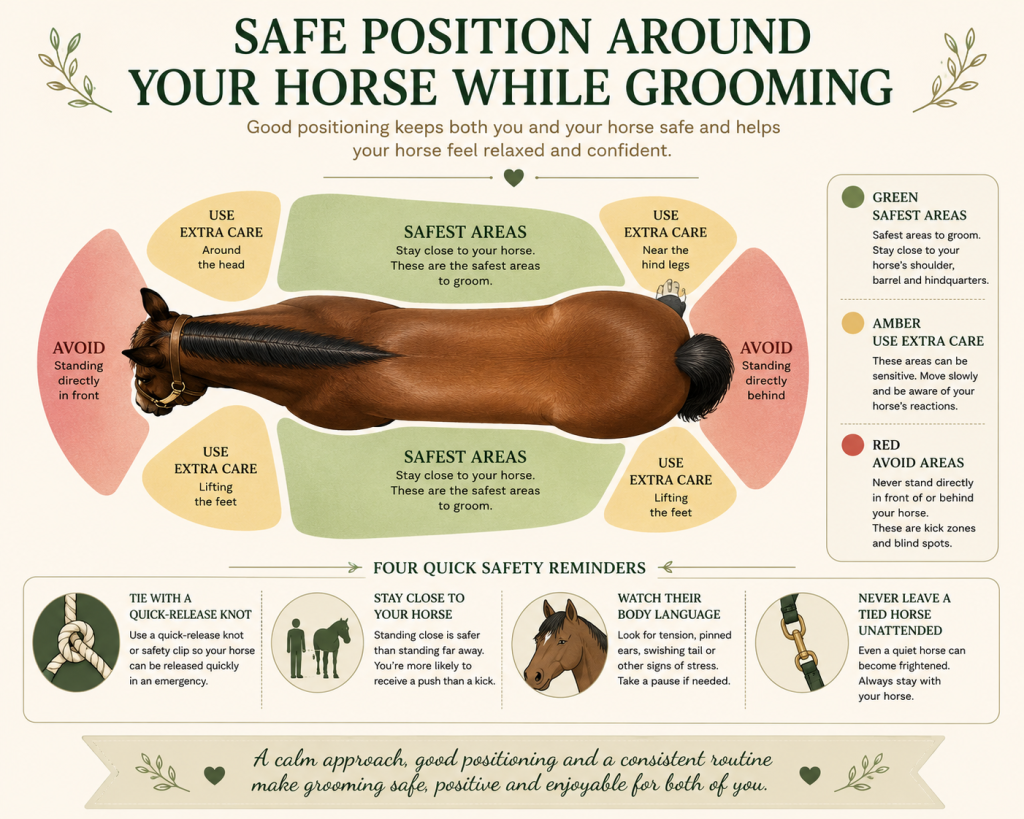
If your horse is happy being tied up, use a well-fitting headcollar and lead rope attached with a quick-release knot. This allows the rope to be untied quickly if your horse becomes frightened or pulls back.
Some yards use cross-ties or panic clips designed to release under pressure. Always follow your yard’s safety procedures and only use equipment your horse is familiar with.
Never leave a tied horse unattended, even for a short time.
Read Your Horse’s Body Language
Take a moment to observe how your horse is feeling before you begin.
A relaxed horse will often show signs such as:
- Soft eyes
- Relaxed ears that move naturally
- A lowered head
- A resting hind leg
- Calm, regular breathing
If your horse appears tense, anxious or uncomfortable, allow them a few moments to settle before beginning. Speaking calmly and moving slowly can help reassure nervous horses.
Stand in a Safe Position
Always stay close to your horse rather than standing several feet away. Although it may seem safer to keep your distance, standing close means that if your horse moves unexpectedly, you’re more likely to receive a push rather than the full force of a kick.
Whenever possible:
- Stand beside your horse’s shoulder when grooming the front half of the body.
- Stand beside the hindquarters when grooming the back half, keeping one hand on your horse so they know where you are.
- Move calmly around your horse rather than suddenly appearing behind them.
Avoid standing directly in front of or directly behind your horse whenever possible.
Introduce New Equipment Gradually
If you’re using a new brush or grooming tool, allow your horse to see and smell it before you begin. Introduce unfamiliar equipment slowly, particularly if your horse is young or easily worried.
Starting with gentle strokes on the shoulder or neck can help your horse relax before moving on to more sensitive areas.
Make Grooming a Positive Experience
Many horses enjoy being groomed when it’s carried out calmly and consistently. Keeping your movements slow, speaking quietly and following the same routine each day helps many horses understand what to expect.
If your horse becomes uncomfortable or unsettled, pause for a moment rather than rushing to finish. Remaining patient will help build confidence and trust over time.
💡 Practical Horse Owner Tip
Before picking up your first brush, spend a few seconds observing your horse from head to toe. You may notice small cuts, swelling, loose shoes or a damaged rug before you even begin grooming. Developing this habit turns every grooming session into a valuable daily health check.
Step-by-Step Grooming Routine
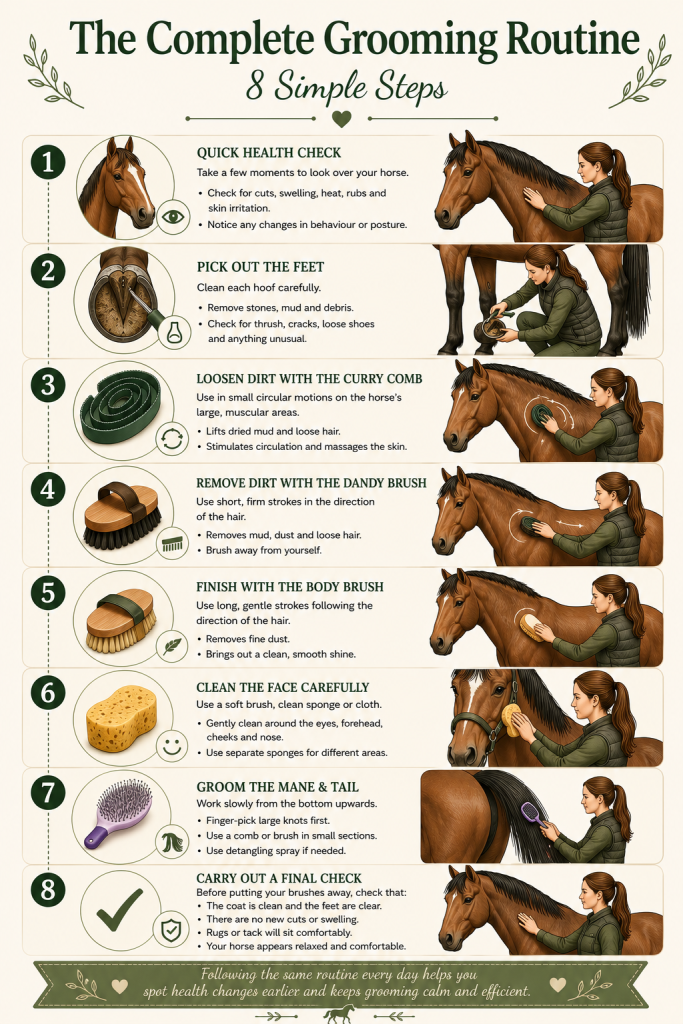
Now that your horse is safely secured and you have your grooming kit ready, it’s time to begin grooming. Following the same routine each day not only makes the process more efficient, but also helps ensure no areas are missed. Over time, you’ll become familiar with what is normal for your horse, making it much easier to notice changes in their health or condition.
Although every owner develops their own routine, the following order is widely used and provides a thorough, practical approach to daily grooming.
Step 1: Start with a Quick Health Check
Before picking up your first brush, take a few moments to look over your horse.
Check for:
- Cuts or scrapes
- Swelling
- Heat in the legs
- Missing shoes
- Mud fever or skin irritation
- Loose rugs or rub marks
- Changes in behaviour or posture
Running your hands gently over your horse’s body can often reveal problems that aren’t immediately visible.
Step 2: Pick Out the Feet
Cleaning the hooves first removes stones, mud and debris that could become compacted while grooming.
Using a hoof pick, carefully clean each hoof from the heel towards the toe, avoiding the frog.
While lifting each foot, look for:
- Stones
- Packed mud
- Thrush
- Cracks
- Loose or missing shoes
- Unusual smells or discharge
We’ll cover hoof care in more detail later in this guide.
Step 3: Loosen Dirt with the Curry Comb
Using a rubber curry comb, work in small circular motions over the large, muscular areas of the horse.
This helps to:
- Lift dried mud
- Remove loose hair
- Stimulate circulation
- Massage the skin
- Bring dirt to the surface
Avoid using the curry comb on the face, lower legs and other bony or sensitive areas.
Step 4: Remove Dirt with the Dandy Brush
Once the dirt has been loosened, use the dandy brush with short, firm strokes following the direction of the hair.
This brush removes:
- Mud
- Dust
- Loose hair
- Dirt lifted by the curry comb
Brush away from yourself to avoid creating unnecessary dust around your face.
Step 5: Finish with the Body Brush
The body brush removes the fine dust left behind by the dandy brush while smoothing the coat and distributing natural oils.
Use long, gentle strokes, paying particular attention to areas where tack will sit.
This leaves the coat clean, smooth and ready for riding or rugging.
Step 6: Clean the Face Carefully
The face is one of the most sensitive parts of your horse’s body.
Use either:
- A soft body brush
- A clean sponge
- A soft cloth
Gently clean around:
- Eyes
- Forehead
- Cheeks
- Nose
Never use the same sponge on both the face and underneath the tail, as this can spread bacteria.
Step 7: Groom the Mane and Tail
Work through the mane and tail slowly, starting at the bottom and working upwards in small sections.
Finger-pick larger knots before using a comb or brush to reduce breakage.
If needed, apply a detangling spray to help remove knots more easily.
Avoid pulling aggressively through tangled hair, as this can cause discomfort and unnecessary hair loss.
Step 8: Carry Out a Final Check
Before putting your brushes away, take one last look over your horse.
Check that:
- The coat is clean.
- The feet are clear of debris.
- There are no new cuts or swelling.
- Rugs or tack will sit comfortably.
- Your horse appears relaxed and comfortable.
This final inspection only takes a minute but can help you spot small problems before they become bigger ones.
💡 Practical Horse Owner Tip
Try to follow the same grooming order every day. A consistent routine makes grooming quicker, ensures no areas are overlooked and helps you recognise subtle changes in your horse’s condition much sooner.
Cleaning the Hooves
Your horse’s hooves should be cleaned every day, even if they are not being ridden. Picking out the feet removes stones, mud and other debris that can become trapped within the hoof, while also giving you the opportunity to check for early signs of injury or disease.
Healthy hooves are essential for your horse’s comfort and soundness. Spending just a few minutes inspecting each foot can help you identify problems before they become more serious.
How to Pick Out a Horse’s Hooves
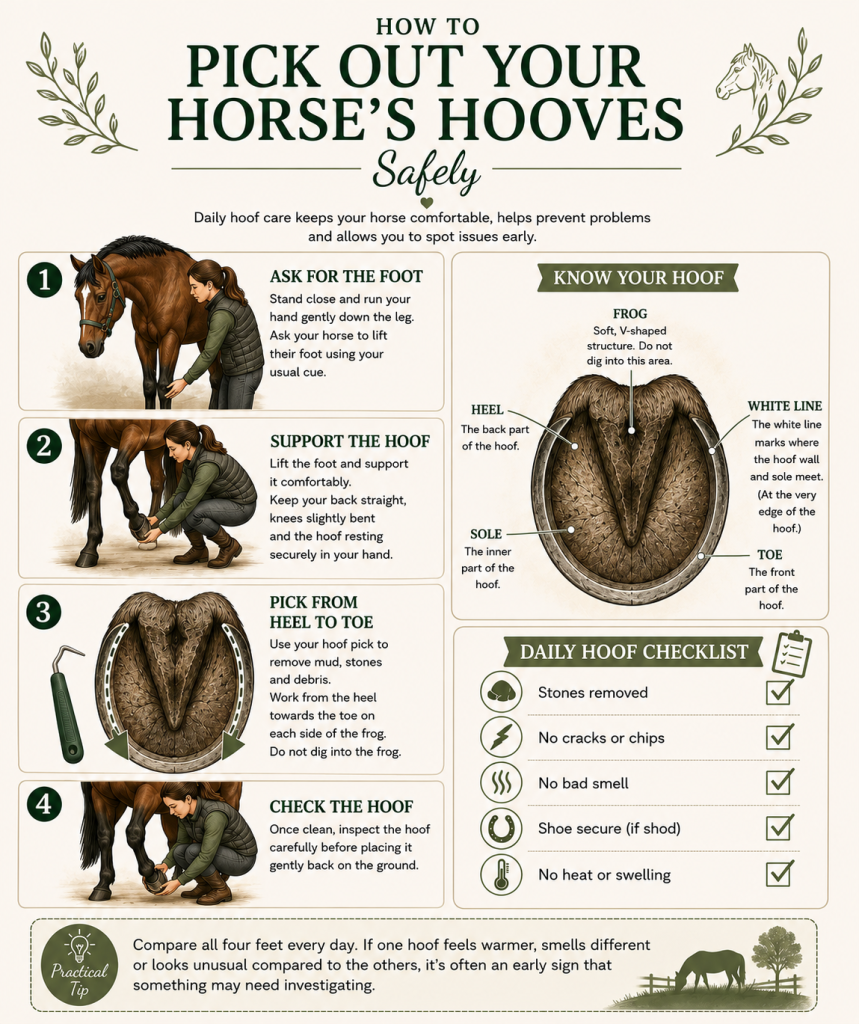
Before lifting a hoof, stand close to your horse and run your hand gently down their leg. This lets them know what you’re about to do and encourages them to shift their weight.
Ask your horse to lift their foot using your usual cue. Support the hoof comfortably while keeping your back straight and your knees slightly bent to avoid straining yourself.
Using a hoof pick, begin at the heel and work towards the toe, removing mud, stones and packed debris from either side of the frog.
Take care not to dig into the frog, as this is a soft, sensitive structure that plays an important role in shock absorption and blood circulation within the hoof.
Once the hoof is clean, place it gently back on the ground rather than allowing it to drop.
What Should You Look For?
Every time you pick out your horse’s feet, take a few extra moments to inspect the hoof carefully.
Look out for:
- Stones or gravel lodged in the hoof.
- Packed mud or manure.
- Unpleasant smells, which may indicate thrush.
- Cracks or chips in the hoof wall.
- Loose, raised or missing horseshoes.
- Nails that appear to have shifted.
- Signs of bruising or puncture wounds.
- Heat or swelling around the hoof or lower limb.
Getting into the habit of checking these things every day makes it much easier to notice when something has changed.
Why Daily Hoof Checks Matter
Many hoof problems develop gradually and may not be obvious at first. A small crack, loose shoe or early case of thrush is often much easier to treat when spotted early.
Daily hoof care can help reduce the risk of:
- Bruising.
- Thrush.
- Hoof abscesses.
- Lost shoes.
- Lameness caused by trapped stones or foreign objects.
Regular hoof cleaning also allows your farrier to work with a cleaner, healthier hoof at each visit.
When Should You Contact Your Farrier or Vet?
Although small chips and minor wear are often normal, you should seek professional advice if you notice:
- A deep crack extending up the hoof wall.
- A puncture wound.
- Persistent foul-smelling discharge.
- Significant heat or a strong digital pulse.
- Sudden lameness.
- A shoe that has partially detached or twisted.
- Bleeding from the hoof.
Never attempt to remove deeply embedded objects from the hoof yourself unless advised by your vet, as doing so may make it more difficult to assess the injury.
💡 Practical Horse Owner Tip
Get into the habit of comparing all four feet every day. If one hoof feels noticeably warmer, smells different or looks unusual compared to the others, it’s often an early sign that something may need investigating.
Mane and Tail Care
A horse’s mane and tail not only contribute to their appearance but also provide important protection against flies and the weather. Regular care helps keep the hair healthy, reduces tangles and breakage, and makes grooming more comfortable for your horse.
Unlike the body, the mane and tail should be groomed gently. Pulling through knots or brushing roughly can cause unnecessary discomfort and remove healthy hairs, leaving the mane and tail thinner over time.
Caring for the Mane
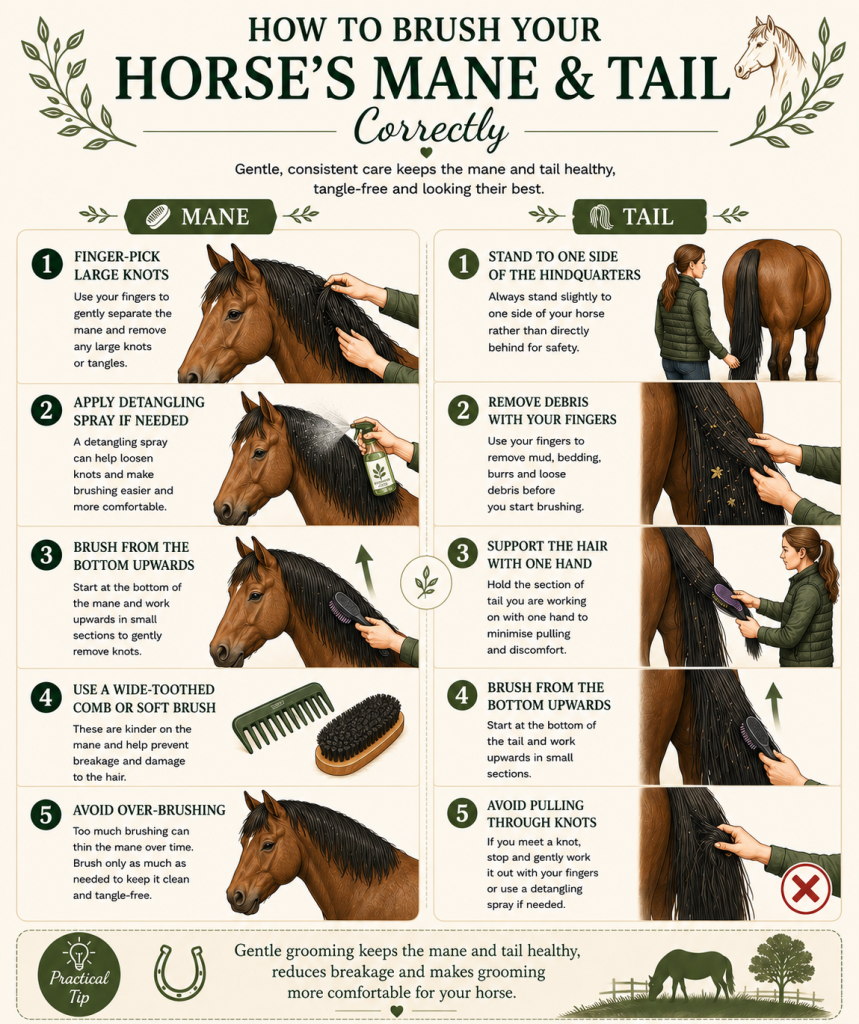
Before reaching for a brush or comb, run your fingers through the mane to remove larger knots and separate tangled sections. This reduces the amount of pulling required and helps prevent hair from breaking.
If the mane is particularly tangled, applying a detangling spray can make it easier to work through the hair without causing unnecessary damage.
Using a wide-toothed comb or a soft mane brush, begin at the bottom of the hair and gradually work upwards in small sections. This method removes tangles more gently than starting at the top.
Take care not to over-brush the mane, as excessive grooming can gradually thin the hair.
Caring for the Tail
The tail often collects mud, bedding, burrs and other debris, so it benefits from regular inspection.
Before brushing, gently separate the hairs with your fingers to remove larger knots and foreign material. Once the biggest tangles have been removed, use a tail brush or comb, working from the bottom upwards in small sections.
Supporting the section of tail you’re brushing with one hand while brushing with the other reduces the amount of pulling felt by your horse and helps minimise hair breakage.
Many owners choose to stand slightly to one side of the hindquarters while grooming the tail rather than directly behind the horse, improving safety if the horse moves unexpectedly.
Washing the Mane and Tail
The mane and tail do not need to be washed every day.
Occasional washing with a shampoo specifically designed for horses can help remove grease, sweat and dirt. After washing, rinse thoroughly to remove any shampoo residue, then allow the hair to dry before brushing if possible.
Using conditioner or a detangling spray can help keep the hair manageable between washes.
Avoid Common Mistakes
To keep the mane and tail healthy:
- Avoid pulling harshly through knots.
- Work from the bottom upwards when brushing.
- Use detangling products when needed.
- Avoid over-washing, as this can dry the hair.
- Remove burrs and debris carefully rather than pulling them free.
- Stand safely to one side when grooming the tail.
With regular, gentle care, your horse’s mane and tail will remain healthier, fuller and easier to maintain throughout the year.
💡 Practical Horse Owner Tip
If your horse has a particularly thick or easily tangled tail, try finger-picking small knots before using a brush. It may take a little longer, but it significantly reduces hair breakage and helps keep the tail looking fuller over time.
Seasonal Grooming Tips
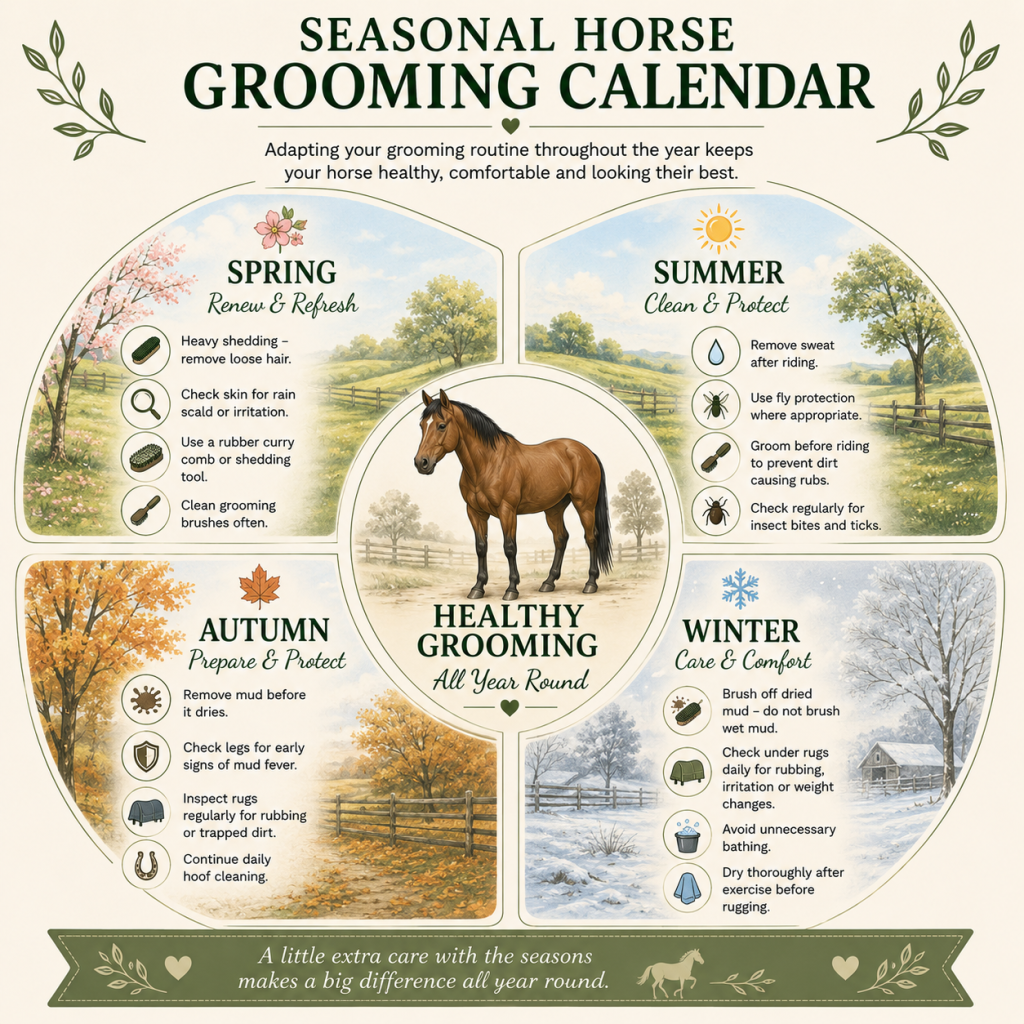
Your horse’s grooming routine will naturally change throughout the year as the seasons bring different weather conditions, coat changes and management routines. Adapting your approach helps keep your horse comfortable while maintaining a healthy coat and skin all year round.
Although every horse is different, understanding how grooming needs change with the seasons will help you provide the right care at the right time.
🌸 Spring
Spring is one of the busiest times for grooming as many horses begin to shed their thick winter coats.
Daily grooming helps remove loose hair more efficiently and keeps the skin healthy as the new summer coat grows through.
During spring:
- Increase grooming frequency if your horse is shedding heavily.
- Use a rubber curry comb or shedding tool where appropriate.
- Check for rain scald or skin irritation hidden beneath the winter coat.
- Clean grooming brushes more regularly as they quickly fill with loose hair.
This is also a good time to assess your horse’s body condition as thick winter coats can hide changes in weight.
☀️ Summer
Summer grooming focuses on keeping your horse clean, comfortable and protected from flies.
Sweat, dust and dried mud can quickly build up during warm weather, particularly after exercise.
During summer:
- Remove dried sweat after riding.
- Groom before riding to prevent dirt causing rubs beneath tack.
- Check regularly for cuts, insect bites and ticks.
- Use fly spray where appropriate.
- Wash the coat only when necessary, ensuring your horse dries properly afterwards.
Many horses appreciate being groomed during cooler parts of the day when temperatures are lower.
🍂 Autumn
As temperatures begin to fall, horses gradually grow their winter coats.
Autumn is an ideal time to prepare for wetter conditions and establish a routine that helps prevent mud-related skin conditions.
During autumn:
- Remove mud before it dries where possible.
- Check legs carefully for early signs of mud fever.
- Continue daily hoof cleaning as wetter ground increases the risk of hoof problems.
- Inspect rugs regularly for rubbing or trapped dirt.
Keeping grooming equipment clean becomes especially important during damp weather.
❄️ Winter
Winter grooming often focuses more on maintaining comfort than achieving a perfectly clean coat.
Many horses live out for longer periods and may arrive at the stable covered in mud. In most cases, allowing mud to dry before brushing is much kinder to both your horse’s coat and your brushes.
During winter:
- Remove dried mud rather than scrubbing wet mud.
- Pay particular attention to the legs and feet.
- Avoid bathing unless absolutely necessary.
- Dry your horse thoroughly after exercise before rugging.
- Check under rugs daily for rubbing, skin irritation or weight changes.
Even during cold weather, regular grooming remains an excellent opportunity to carry out a daily health check.
💡 Practical Horse Owner Tip
Your horse’s grooming routine should adapt to their individual needs, not just the season. Factors such as age, breed, workload, whether they’re clipped, and whether they live out or are stabled will all influence how much grooming they require.
Common Grooming Mistakes
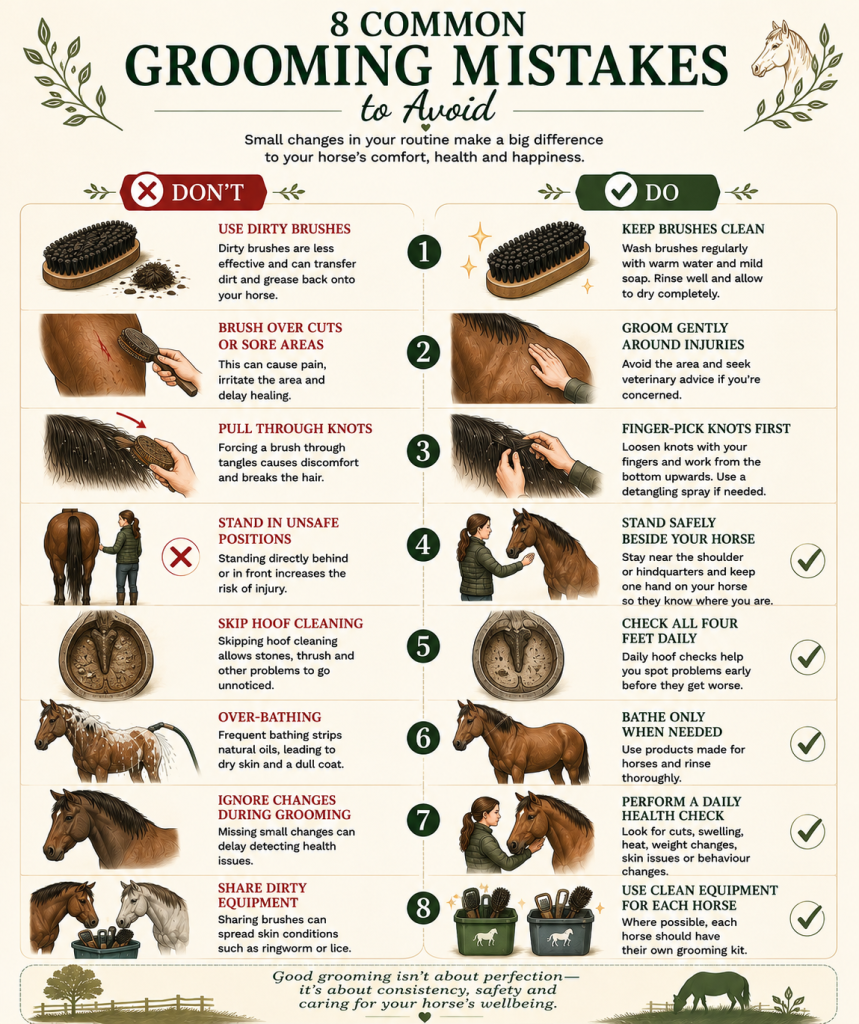
Even experienced horse owners can occasionally fall into bad habits when grooming. While most mistakes are easily corrected, some can make grooming less effective, cause discomfort for your horse or even increase the risk of injury.
Being aware of these common mistakes will help you develop good grooming habits that keep your horse comfortable, healthy and relaxed.
Using Dirty Brushes
Brushes quickly collect loose hair, mud, grease and dust. If they are never cleaned, they become far less effective and can even transfer dirt back onto your horse’s coat.
Wash grooming brushes regularly using warm water and a mild detergent, allowing them to dry completely before storing them.
Brushing Over Cuts or Sensitive Areas
If your horse has a wound, swelling or an area that appears painful, avoid brushing directly over it.
Instead, inspect the area carefully and seek veterinary advice if you are concerned about the cause or if the injury appears to be worsening.
Pulling Through Knots
Forcing a brush or comb through tangled hair causes discomfort and unnecessary breakage.
Always loosen large knots with your fingers first and work from the bottom upwards, using a detangling spray if needed.
Standing in Unsafe Positions
Standing directly behind or directly in front of your horse increases the risk of injury if they move unexpectedly.
Whenever possible, remain close to your horse’s shoulder or hindquarters, keeping one hand on them so they know where you are.
Forgetting the Feet
It can be tempting to skip hoof cleaning if you’re short on time, particularly if your horse hasn’t been ridden.
However, daily hoof checks allow you to spot stones, thrush, cracks and other problems before they become more serious.
Over-Bathing
Although a clean horse may look impressive, frequent bathing can strip away the coat’s natural oils, leaving the skin dry and the coat dull.
Only bathe your horse when necessary, using products specifically designed for horses, and always rinse thoroughly.
Ignoring Changes During Grooming
Grooming should never become a task carried out on autopilot.
Every session is an opportunity to notice changes such as:
- New cuts or grazes.
- Swelling.
- Heat.
- Weight loss or gain.
- Skin irritation.
- Changes in behaviour.
Taking just a few extra moments to observe your horse each day can help identify health concerns much earlier.
Sharing Grooming Equipment
If several horses use the same grooming brushes without being cleaned between uses, skin conditions such as ringworm or lice can spread more easily.
Where possible, each horse should have their own grooming kit, particularly on larger yards.
💡 Practical Horse Owner Tip
Remember that grooming isn’t about making your horse look perfect—it’s about keeping them healthy. A few extra minutes spent observing your horse each day can often be far more valuable than achieving a spotless coat.
Myths vs Facts
| Myth | Fact |
|---|---|
| You should bathe your horse regularly to keep them clean. | Frequent bathing can strip the coat of its natural oils, leaving the skin dry and the coat dull. Most horses only need bathing occasionally, using products specifically formulated for horses. |
| The harder you brush, the cleaner your horse becomes. | Firm brushing has its place when using a dandy brush, but excessive force can irritate the skin and make grooming uncomfortable. Gentle, methodical grooming is usually far more effective. |
| Grooming is only important before riding. | Daily grooming is one of the easiest ways to monitor your horse’s health. It allows you to spot |
| Every horse needs the same grooming routine. | Every horse is different. Breed, coat type, workload, age, management and the time of year all influence how much grooming a horse requires. |
| Pulling through tangles is the quickest way to remove them. | Pulling through knots causes discomfort and breaks healthy hairs. Finger-picking larger knots first and working from the bottom upwards is kinder and much more effective. |
| If your horse isn’t being ridden, you can skip picking out the feet. | Hooves should be checked every day, whether your horse is ridden or not. Daily hoof care helps prevent stones, thrush, abscesses and other common hoof problems. |
| Grooming is only about making your horse look nice. | A clean coat may be the visible result, but grooming is really about monitoring your horse’s health, improving comfort, encouraging circulation and strengthening your relationship with your horse. |
💡 Practical Horse Owner Tip
The best grooming routine isn’t the longest or most expensive—it’s the one that’s carried out consistently. A few minutes of careful grooming every day will benefit your horse far more than an occasional lengthy grooming session.
Frequently Asked Questions
How often should I groom my horse?
Most horses benefit from a quick daily groom, even on days they are not ridden. Regular grooming helps keep the coat healthy while allowing you to monitor your horse’s condition.
Should I groom my horse before or after riding?
Ideally, both. Grooming before riding removes dirt that could cause rubs beneath the saddle and tack, while grooming afterwards helps remove sweat and provides another opportunity to check for injuries.
How often should I pick out my horse’s feet?
Your horse’s feet should be picked out every day, regardless of whether they have been ridden.
Do I need expensive grooming brushes?
No. A small collection of good-quality brushes used correctly is usually more effective than owning lots of expensive equipment.
Can I use human shampoo on my horse?
No. Human shampoos have a different pH and may irritate your horse’s skin. Always use products specifically designed for horses.
How often should I wash my horse?
Only when necessary. Over-bathing can remove the coat’s natural oils and dry the skin.
My horse doesn’t like being groomed. What should I do?
Move slowly, use gentle pressure and observe your horse’s body language. If they consistently react to grooming in one area, consider whether there may be pain or discomfort and seek veterinary advice if appropriate.
Why does my horse enjoy being groomed?
Many horses find gentle grooming relaxing because it stimulates the skin, improves circulation and can mimic the mutual grooming behaviours seen between horses.
Should I groom my horse in winter?
Yes. Winter grooming remains important, although the focus often shifts towards removing dried mud, checking the skin beneath rugs and maintaining hoof health.
How do I know if my horse’s coat is healthy?
A healthy coat is usually smooth, clean and free from excessive dandruff, bald patches or sores. Regular grooming makes it much easier to notice changes that may require further investigation.
Glossary
Body Brush – A soft brush used to remove fine dust and distribute natural oils.
Curry Comb – A rubber or plastic grooming tool used in circular motions to loosen dirt, mud and loose hair.
Dandy Brush – A stiff-bristled brush used to remove dirt lifted by the curry comb.
Detangling Spray – A grooming product designed to reduce knots and make brushing easier.
Frog – The V-shaped structure on the underside of the hoof that helps absorb shock and supports circulation.
Hoof Pick – A tool used to clean mud, stones and debris from the underside of the hoof.
Mud Fever – A bacterial skin condition commonly affecting the lower legs in wet, muddy conditions.
Quick-Release Knot – A knot designed to be untied quickly if a horse becomes distressed while tied.
Shedding – The natural process of losing the winter coat as temperatures increase in spring.
Thrush – A bacterial infection affecting the frog of the hoof, often associated with damp or dirty conditions.
References
- Horse&Country. Articles for horse care advice
- British Horse Society (BHS). Horse Care Advice and Welfare Resources.
- Kramer. Guides on grooming kits and products
- Horse Sport. Magazine containing helpful articles and guides aimed at horse owners and workers
- Houghton Country. Equine shop with Help & Advice section with guides for horse care
- Mad Barn. Equine Nutritionists with educational guides for looking after horses
Disclaimer
The information provided in this article is intended for educational purposes only and should not be considered a substitute for professional veterinary advice, diagnosis or treatment.
Every horse is an individual, and management decisions should always take into account your horse’s age, health, workload and individual needs. If your horse is unwell, or you have any concerns about their health or welfare, contact your veterinary surgeon without delay.
While every effort has been made to ensure the information in this guide is accurate and up to date at the time of publication, recommendations and best practice may change as new research becomes available.